If you're planning a hay shed build in Sicamous or the surrounding Shuswap, you're facing some of the heaviest snowfall in the southern Interior along with year-round moisture that make structural engineering and material choices critical.
Farrow Built works with property owners across Sicamous, Salmon Arm, Revelstoke, Malakwa, and Craigellachie to design and build structures that handle Shuswap conditions. Building permits in Sicamous are managed by the District of Sicamous or the Columbia Shuswap Regional District. We manage all permits.
Buildings We Construct in Sicamous
- Open-front hay sheds
- Enclosed hay storage buildings
- Round bale storage sheds
- Square bale storage buildings
- Feed storage structures
- Combination hay and equipment sheds
Popular Buildings for Sicamous Property Owners
Many Sicamous clients need hay shed builder services for:
- Round bale storage
- Square bale storage
- Feed protection from weather
- Reducing hay waste and spoilage
- Centralized feed management
30x40 and 40x60 are popular for Sicamous-area builds.
Buildings Designed for Sicamous Weather
Sicamous sits at the gateway between the Shuswap and Revelstoke corridors, receiving very heavy snowfall and sustained moisture. Buildings here need to be engineered for extreme snow loads.
Our structures are designed to keep hay dry through wet winters and protect against wind-driven rain and snow — meeting all local building requirements and site-specific conditions.
Projects Near Sicamous
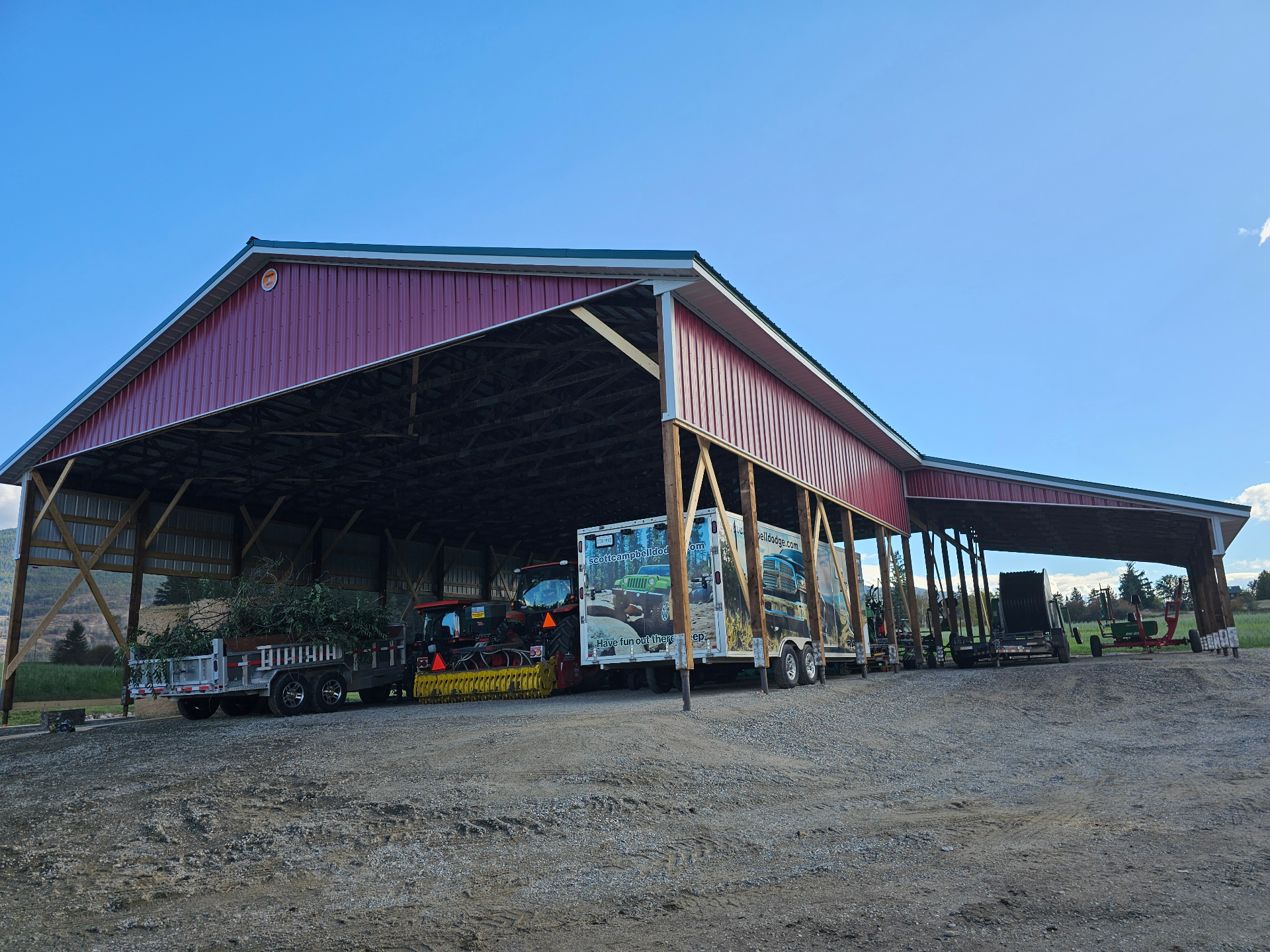
Hay shed near Enderby
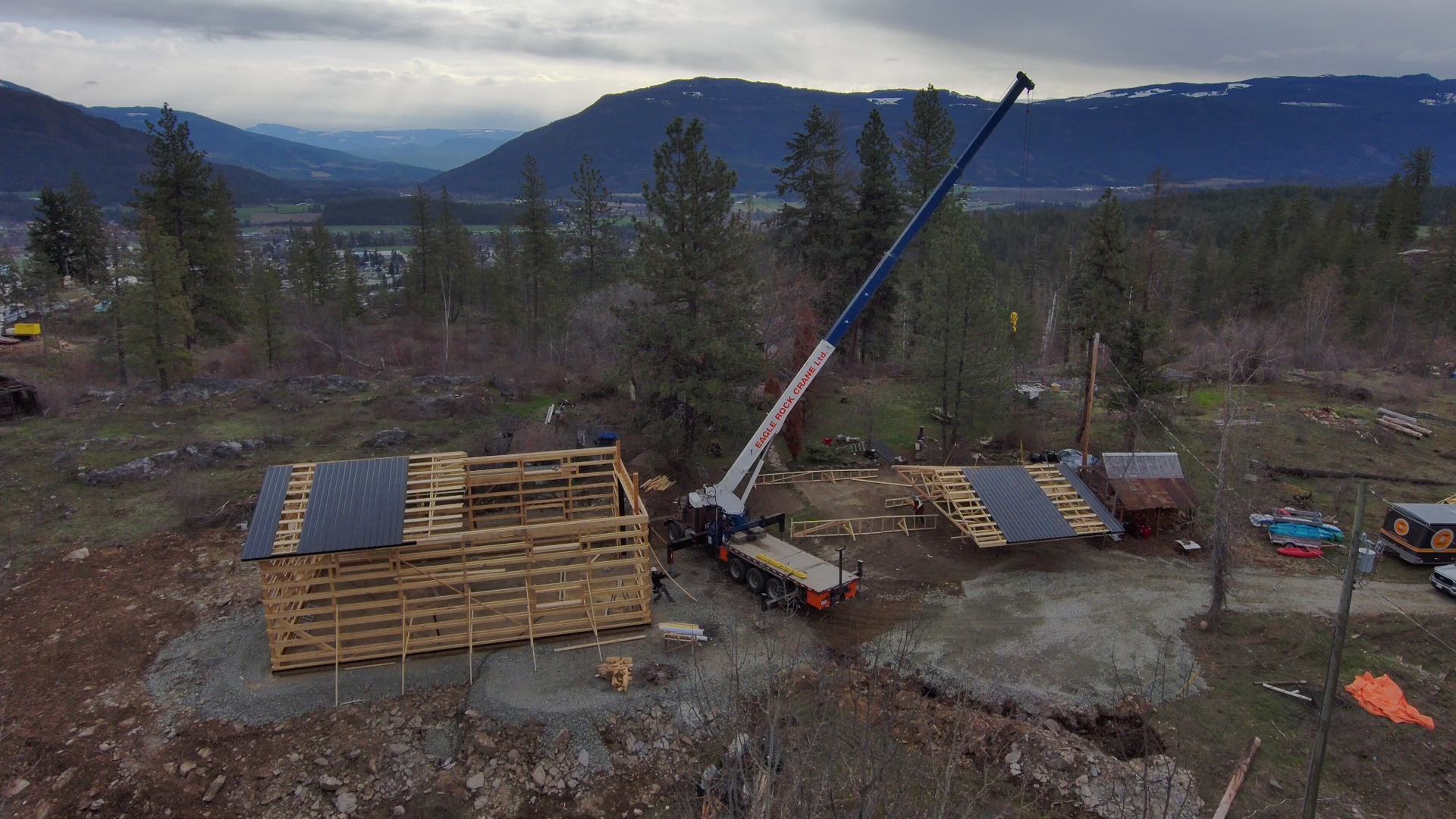
Shop framing near Sicamous
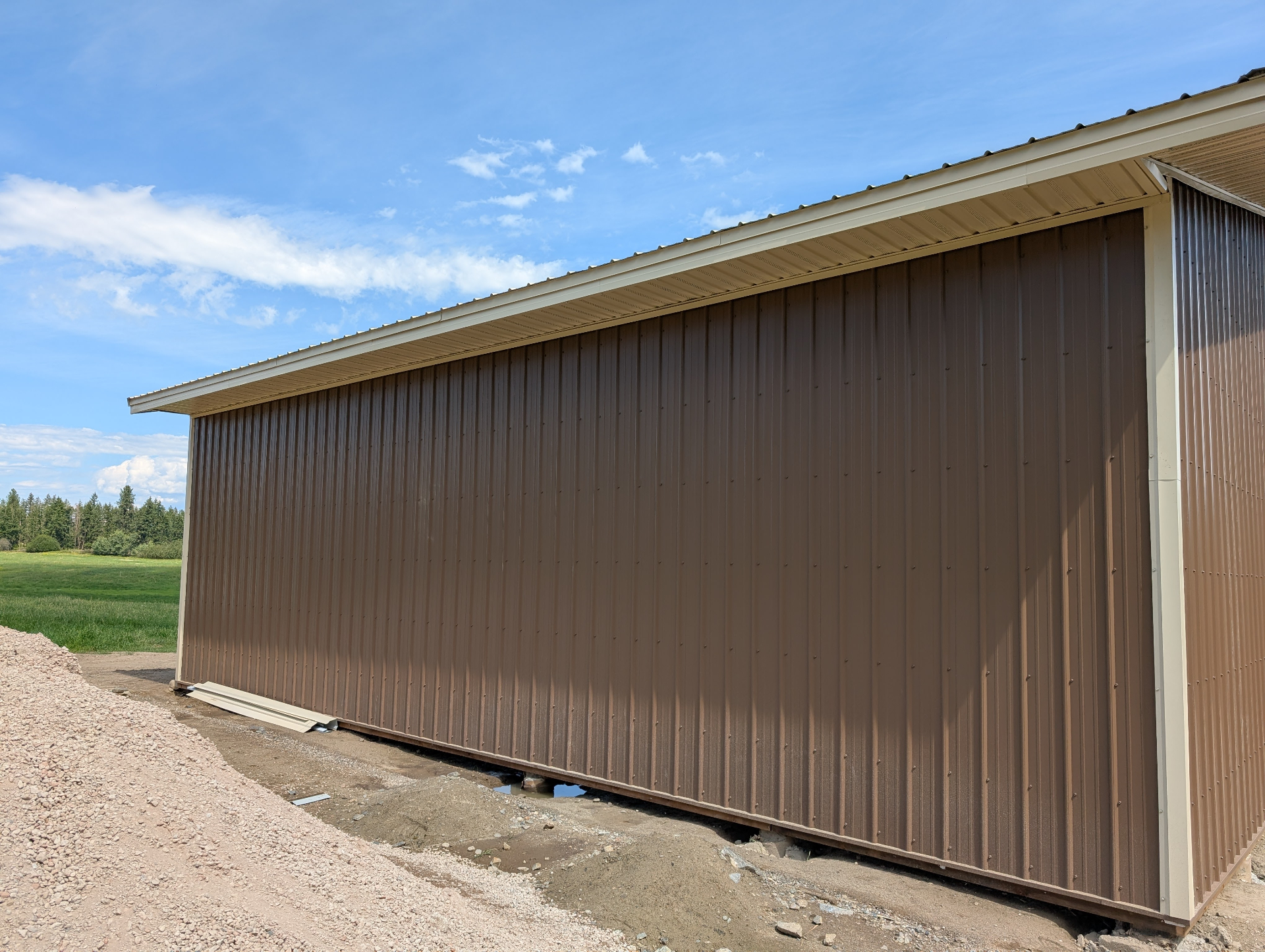
Machine shed near Malakwa
Areas We Serve Near Sicamous
Hay Shed Builder FAQs — Sicamous
Do you build hay sheds in Sicamous?
Yes. Hay sheds are essential in the Shuswap. We build open-front and enclosed designs engineered for heavy snow and wet conditions.
Why is hay storage so important in Sicamous?
Sicamous' heavy snow and prolonged moisture make unprotected hay extremely vulnerable to spoilage. A hay shed is essential for any livestock operation.
What size hay shed should I build?
That depends on your operation. 30x50 for small herds, 40x80 or bigger for larger operations. We help you calculate the right size.